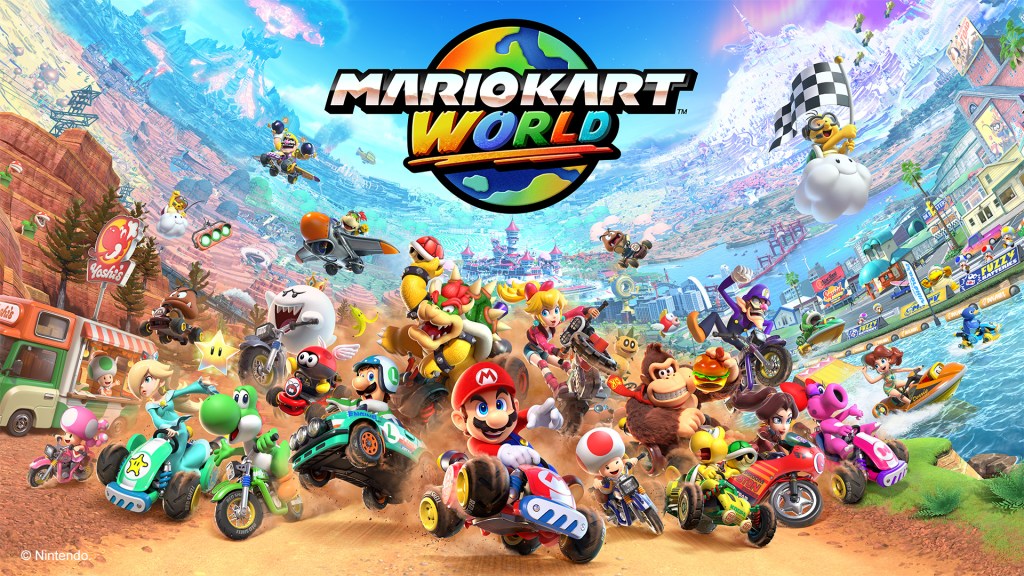
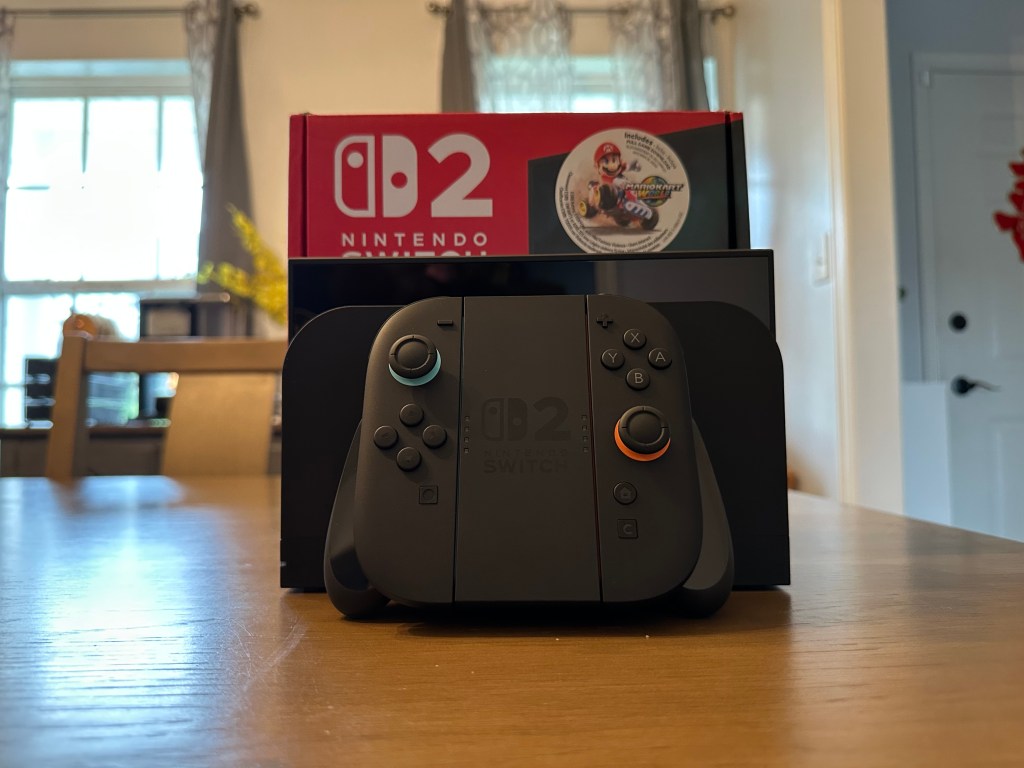
Nintendo needed to come out swinging with a launch title for the Switch 2. And by and large, they did—with Mario Kart World.
This is a game that dials up the chaos to 11 and brings in just enough new mechanics to make the formula feel fresh again. That’s no small feat given how wildly successful Mario Kart 8 Deluxe was on the Switch’s predecessor.
But even with everything Mario Kart World gets right—and there’s a lot—I can’t help but want more.
Behind the Wheel
Visually, this is easily the best-looking Mario Kart to date.
The Switch 2’s hardware lets Mario Kart World shine, whether you’re docked or on handheld. The game runs at a smooth 60fps, even in the middle of a frenzied race full of shells, banana peels, and pileups. The soundtrack is catchy and pays tribute to Mario’s 40-year history. (Feel old yet?)
Little details add charm: Characters look back when using rearview mode, flinch when a blue shell’s on the way, and emote throughout the race. Rainbow Road, in particular, is an absolute stunner.
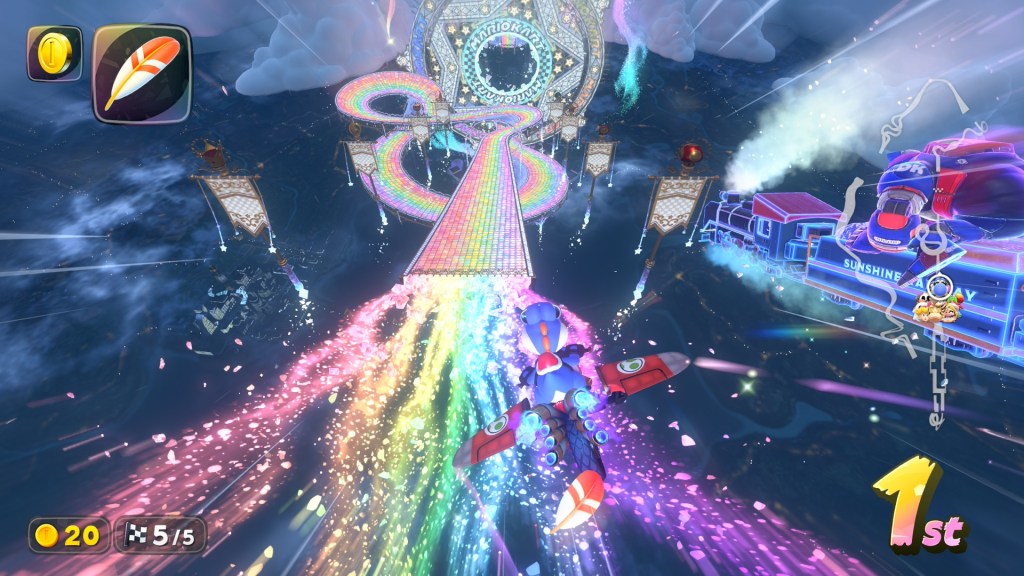
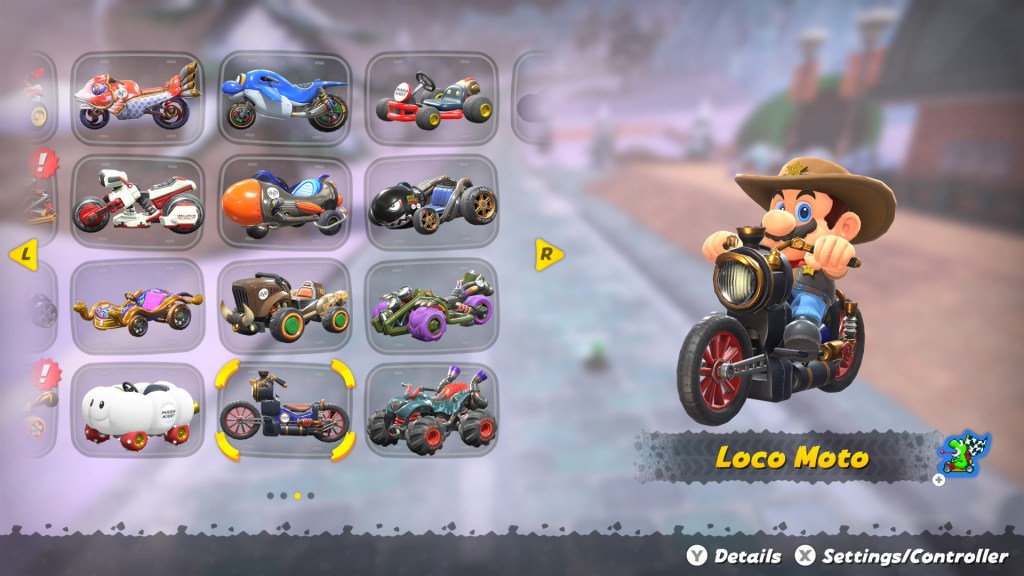
Gameplay is classic Mario Kart—easy to pick up, tough to master—with some smart tweaks. Racing at 50cc feels tame, but bumping it to 150cc makes the game come alive. The vehicle system is overhauled: Instead of picking separate parts (like wheels and gliders), each kart, truck, or bike has its own stats. Combine that with a light or heavy driver, and you’ve got simple yet strategic customization.
Honestly? I don’t miss the old part-picking mechanic. It always felt a bit tedious, especially for casual players like me. Now, new vehicles unlock just by collecting coins—a straightforward, satisfying loop.
The increase from 12 to 24 racers is fantastic. While it’s fun to win, I love being in the thick of the pack, dodging chaos. That’s where the series shines.
The New Mechanics: Cool, But Not Game-Changers
There are some fun additions—super jumps, grinding rails, wall riding—that give speed boosts. They look great and add variety, but in practice (especially in Knockout mode), they feel more like flair than substance. I’d rather have a well-timed item than a flashy rail grind.
Maybe I need to “git gud,” but these mechanics just don’t feel as game-changing as I hoped.
Another new element: drive-thrus and food trucks. Race through them to earn food-themed items that unlock costumes for some characters. It’s a cool concept and encourages players to try everyone in the roster. But not every racer has alternate outfits, and the overall number of costumes feels low.
A World That’s Big—But Empty
The game’s major pitch was its interconnected world: a sprawling map with all the courses tied together by roads, highways, and dirt paths. The courses themselves are top-tier—returning classics and new favorites like Crown City and Peach Stadium. Rainbow Road? Absolutely breathtaking.
But here’s the issue: The world design undercuts the courses.
In Grand Prix mode, two of the three laps typically take place on these connective roads, with only the final lap on the actual course. It’s a neat idea in theory—but in practice, it means you’re spending most of the race on bland stretches of road with light traffic, not the imaginative courses Nintendo built.
I get that Nintendo wanted players to explore the world. But aside from a few P Switches and missions that don’t actually unlock anything, there’s not much incentive. It’s no Forza Horizon 5, where exploration is richly rewarded. It’s just… there.
As someone who’s played Grand Prix since Mario Kart 64, I wish there were a mode that focused solely on full-lap races on the actual tracks.
Knockout Mode Is the Star
If there’s one reason to play Mario Kart World, it’s Knockout mode.
It’s unrelenting, chaotic brilliance: Racers are eliminated at checkpoints if they’re in the bottom four. There are no breaks—just nonstop carnage across multiple tracks.
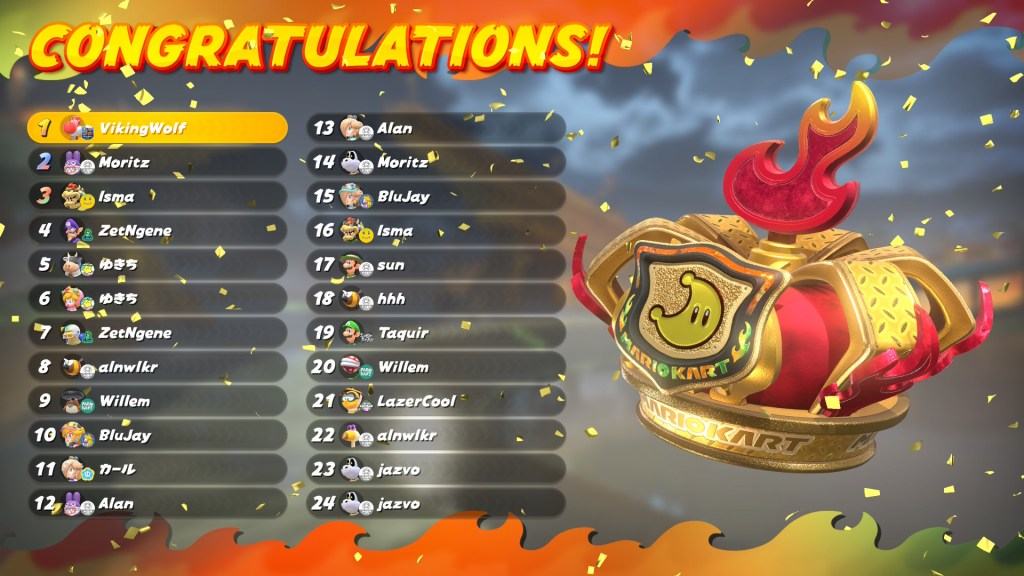
It’s absolutely addictive, especially online. Winning isn’t everything—it’s about surviving, adapting, and riding the madness. I’ve been eliminated in the first round and snagged a second-place finish. Either way, I keep jumping back in.
My wife and I play split-screen regularly, and it just works. To date, she scored the first 1st victory between us — I’m up to two first place victories, much to her chagrin!
Barebones multiplayer
I’m going to be blunt—Mario Kart World’s multiplayer offerings leave a lot to be desired.
It’s perfectly serviceable if you’re playing solo. Jumping into a Grand Prix or Versus Mode lobby is quick and easy. But as of this writing, there’s no way to play online Knockout Tour with a friend in an online lobby. The only option is to run Knockout races against bots.
And while that’s still fun, it lacks the challenge—and sheer chaos—of going up against real players.
Frankly, it’s baffling. On one hand, it’s Nintendo—so maybe it shouldn’t be surprising. Their online infrastructure has always lagged behind. But it still feels counterproductive, if not outright lazy, to launch a major multiplayer mode without letting friends play it together online.
This needs to change.
Do better, Nintendo.
Gimme More
As much as I’m enjoying Mario Kart World, I keep running into the same feeling: I want more.
Collecting 3,000 coins to unlock all the vehicles doesn’t take long. There aren’t enough costumes. And while the world is big and beautiful, it doesn’t reward exploration.
Yes, you could argue that exploring is the point—but when you’re balancing an MMORPG, a toddler, and a towering backlog, a game has to give you a reason to linger.
Don’t get me wrong—Mario Kart World is a must-own for Switch 2. But coming off Mario Kart 8 Deluxe, which lived a nearly 10-year lifespan (if you count its Wii U release), this feels a little barebones. Unfair? Maybe. But it’s hard not to compare, especially when Mario Kart World has the eye-watering price tag of $80.
Right now, Mario Kart World feels like the foundation for something bigger—an evolving platform Nintendo can build on for years to come.
And if that’s the plan? I’m in.
The Good
- Knockout Tour is hands-down the main reason to own this game.
- 24-player races crank the chaos up to glorious new levels.
- Course variety is strong, with a solid mix of new and returning tracks.
- Visuals and soundtrack shine—vibrant, polished, and unmistakably Mario.
The Bad
- Open-world design detracts from the experience of racing on actual tracks.
- Progression is shallow—not enough costumes or vehicles to unlock.
- Exploration feels empty, with little incentive or reward.
- Multiplayer is barebones, especially the lack of online Knockout with friends.
 Viking Wolf's Den Gaming Blog
Leave a comment